This visual guide is retained at its original permanent address. For detailed machine-selection advice, see our sliding-head overview or speak directly with Swiss CNC.
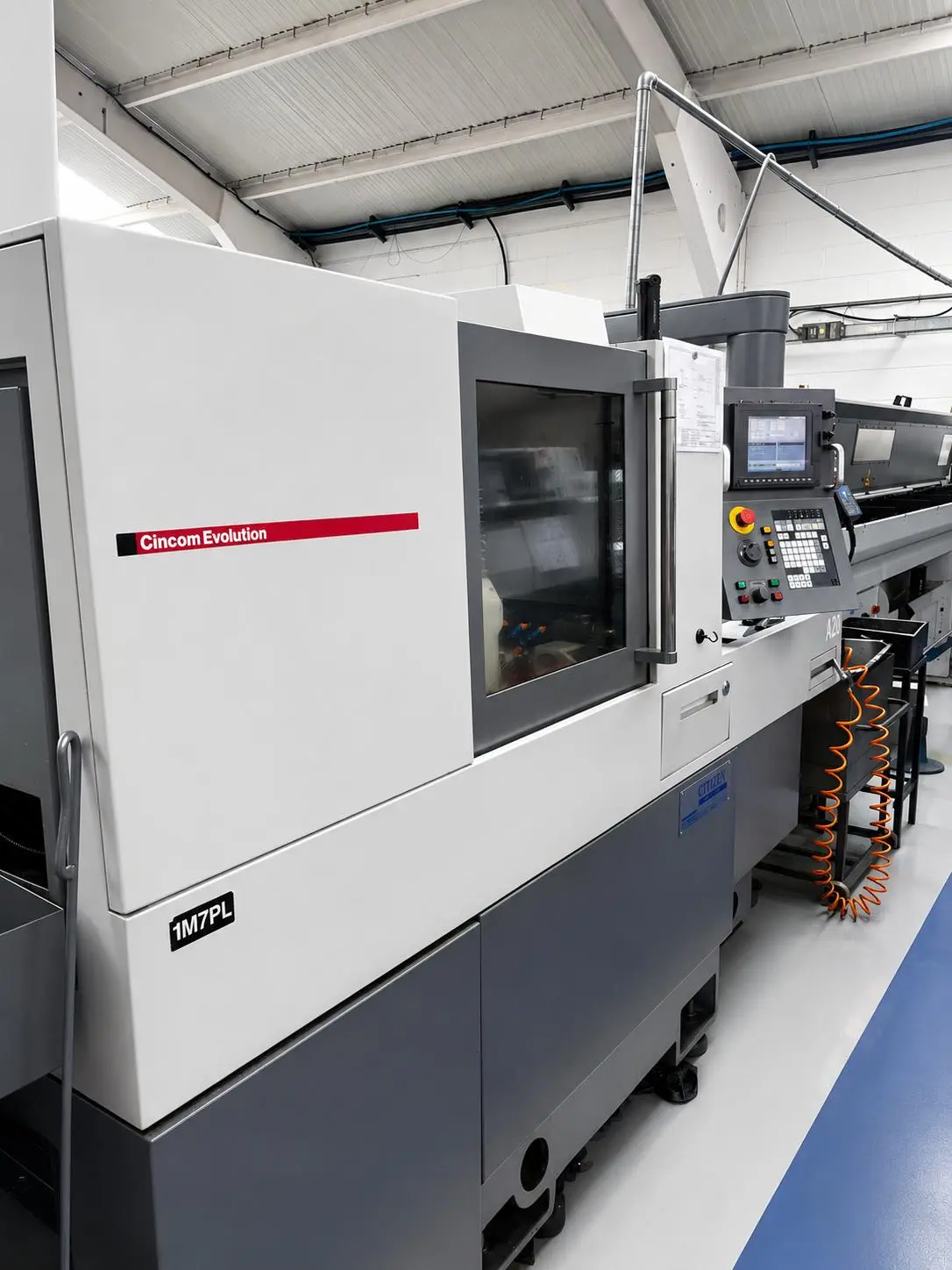
How a sliding-head lathe works
Unlike a conventional fixed-head lathe, a sliding-head machine feeds the bar through a guide bush while the headstock moves in the Z axis. Cutting takes place close to the point of support, helping the machine control deflection on long, slender or small-diameter parts.
Where the process is strongest
Swiss-type turning is particularly effective for repeat production of precise components with a high length-to-diameter ratio. Driven tools, a sub-spindle and multiple axes can combine turning, drilling, cross-working and back-working in one cycle, reducing handling between operations.
Guide-bush or non-guide-bush operation?
A guide bush provides valuable support for slender work, but it also demands suitable bar quality and preparation. For shorter parts, a convertible machine running without the guide bush can reduce remnant length and simplify setup. The right choice depends on part geometry, material, batch size and tolerance—not the machine label alone.
What to check on a used machine
- Confirm bar capacity, control version, axis layout and sub-spindle capability against the intended component.
- Inspect spindle condition, guide-bush alignment, slideways, lubrication history and service records.
- List the bar feeder, high-pressure coolant, extraction, fire suppression, tooling and workholding included in the sale.
- Prove the machine with a representative part where possible, and agree delivery, installation, commissioning and training requirements before purchase.
For help matching a machine to a component, review our sliding-head overview, browse current and sold stock, or ask Swiss CNC.